How to Freeze Sweet Corn

Learn how to freeze sweet corn with this easy tutorial! Freezing is a fun and easy way to preserve fresh corn to enjoy year-round. It takes just a few minutes and tastes amazing in all of your favorite dishes.

I absolutely love corn on the cob slathered with butter (especially homemade chive butter), and I used to view corn as a seasonal food to be enjoyed in the summer months only.
Canned corn or frozen corn from the store is always an option in the winter months, but I’ve never found it to be nearly as delicious as sweet, crunchy fresh corn.
When I realized I could freeze fresh summer corn to enjoy throughout the year, winter got a lot more enjoyable!
You can savor a taste of summer even when there’s snow on the ground by eating frozen corn in chili, soup (like vegetarian tortilla soup), stir-fries, and more!
If you ask me, freezing is the best way (and the easiest way!) to preserve sweet corn. Skip the canner and freeze dryer and learn how to freeze corn in just a few easy steps!
Why Freeze Sweet Corn?
- It tastes way better than store-bought frozen corn! Once I tried home-frozen sweet corn, I never want to go back to buying the bagged frozen corn. It has a way better texture and flavor that makes every dish so yummy.
- If you grow your own sweet corn, preserving it is a must! That way, you can enjoy your summer harvests year-round. Homegrown sweet corn tastes all the better in the dead of winter!
- Freezing is an excellent way to prevent food waste. Whether you bought too much corn or harvested more than you can eat, freezing it will ensure that you get to enjoy it later rather than having it rot in your fridge and end up in the backyard compost bin.
What You’ll Need
- Fresh sweet corn: From the grocery store, farmer’s market, or your garden! You can freeze as many ears of corn as you like — just blanch them in batches as needed.
- A large pot: For blanching the corn.
- A large bowl of ice water: For rapidly cooling the corn after blanching.
- A sharp knife: For cutting the corn off the cobs (this is optional).
- Clean kitchen towel: Paper towels will also work.
- Sheet pan: I like to flash freeze my corn, which prevents it from sticking together in the freezer. This is optional.
- Freeze bags or jars: Grab your favorite container to freeze food in. If you have a FoodSaver or similar vacuum sealer, that will work great too.
How to Freeze Sweet Corn
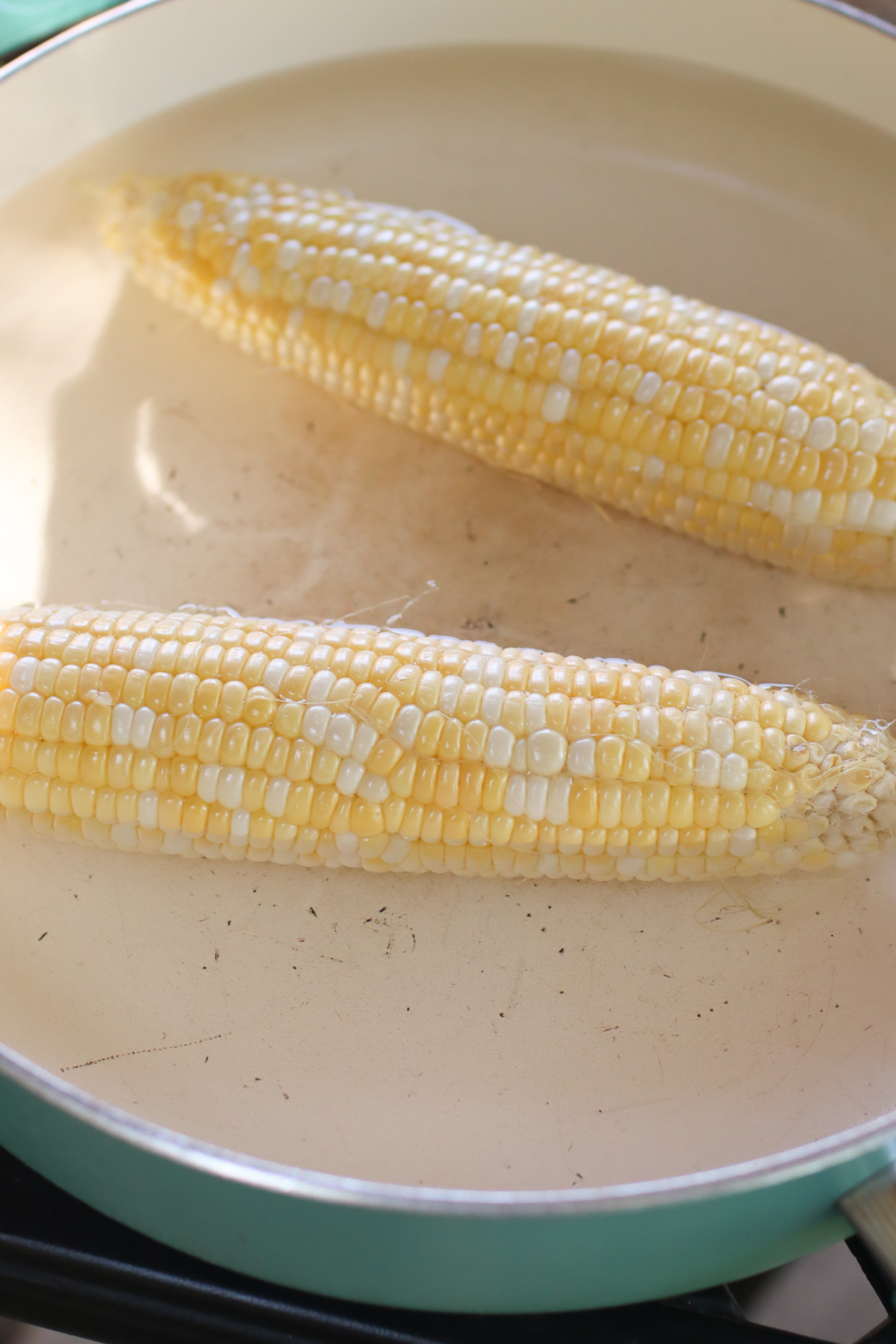
Step 1. Fill a large pot with cold water and get it boiling on the stove. In the meantime, shuck the corn cobs and remove any remaining silks.
Step 2. Once the water is at a rolling boil, drop the cobs in the water and let them boil for 3 minutes. Don’t overcrowd — you may need to work in batches.
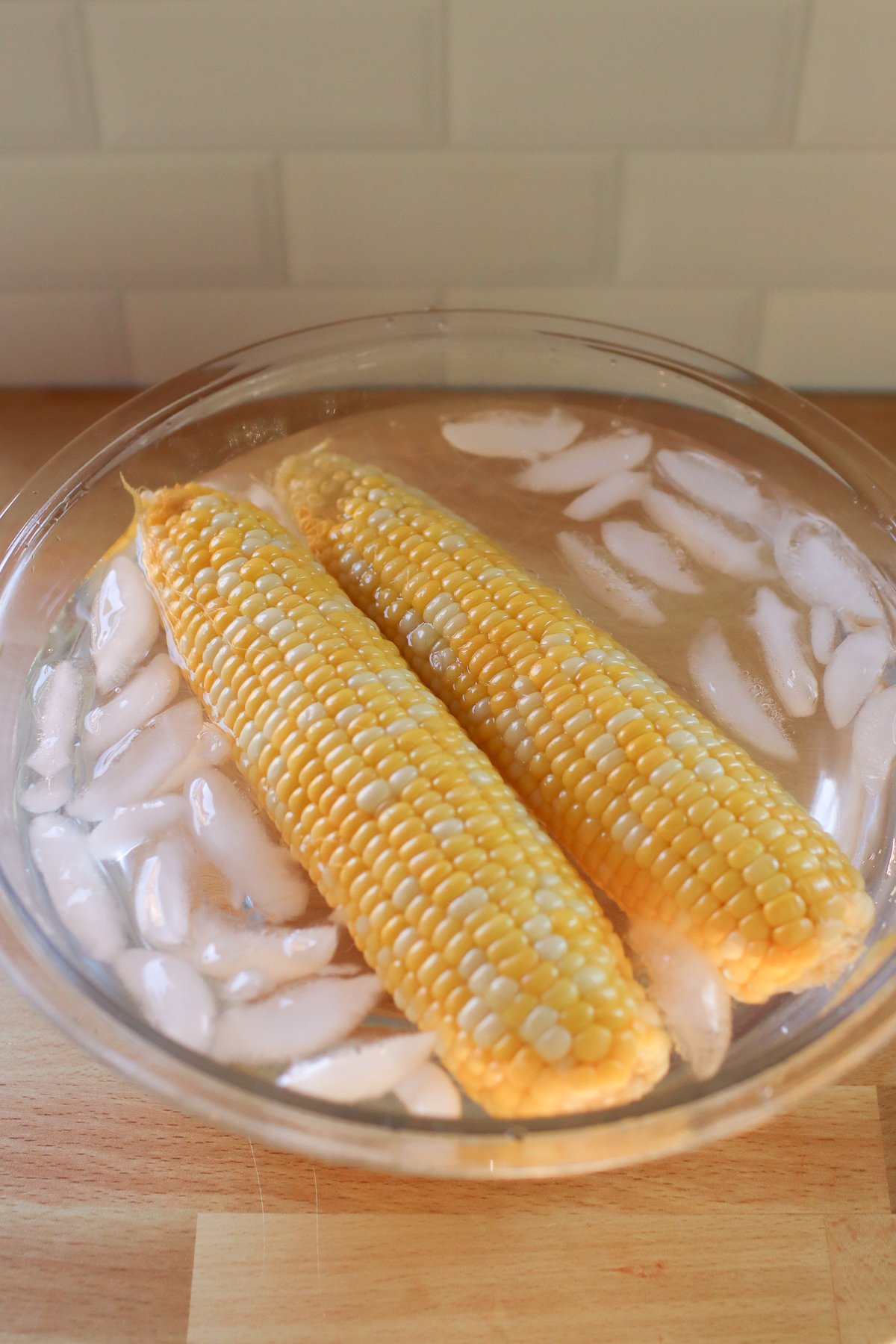
Step 3. Remove the corn from the boiling water and immediately submerge it in an ice bath to rapidly cool it.

Step 4. Let the corn chill in the ice bath for 10-15 minutes, then remove it from the water and pat it dry with a clean towel.
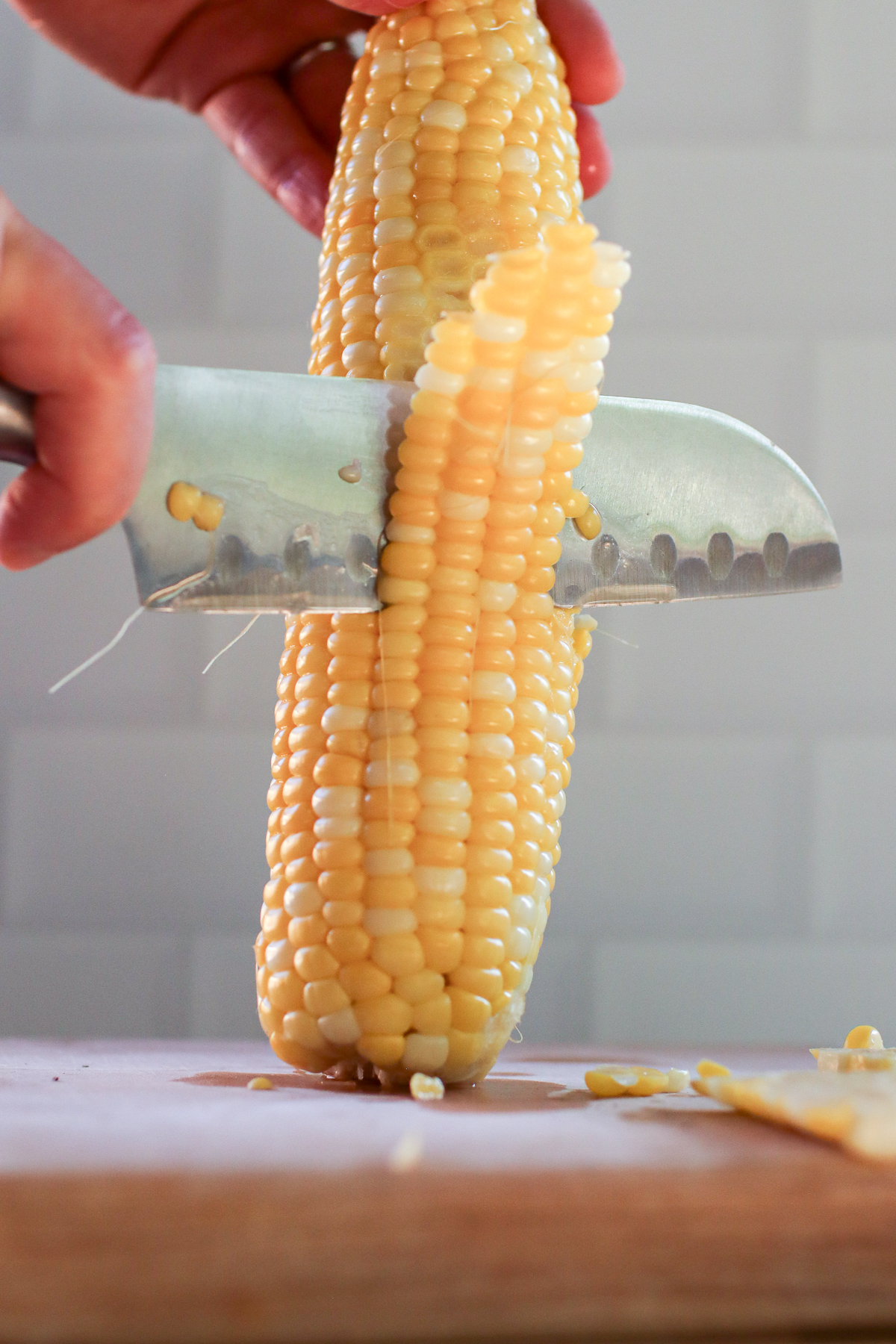
Step 5. Using a sharp knife, cut corn kernels off of the cobs.
Step 6. (Optional) Spread the corn in a thin layer on a parchment paper-lined baking sheet and flash freeze for a few hours.
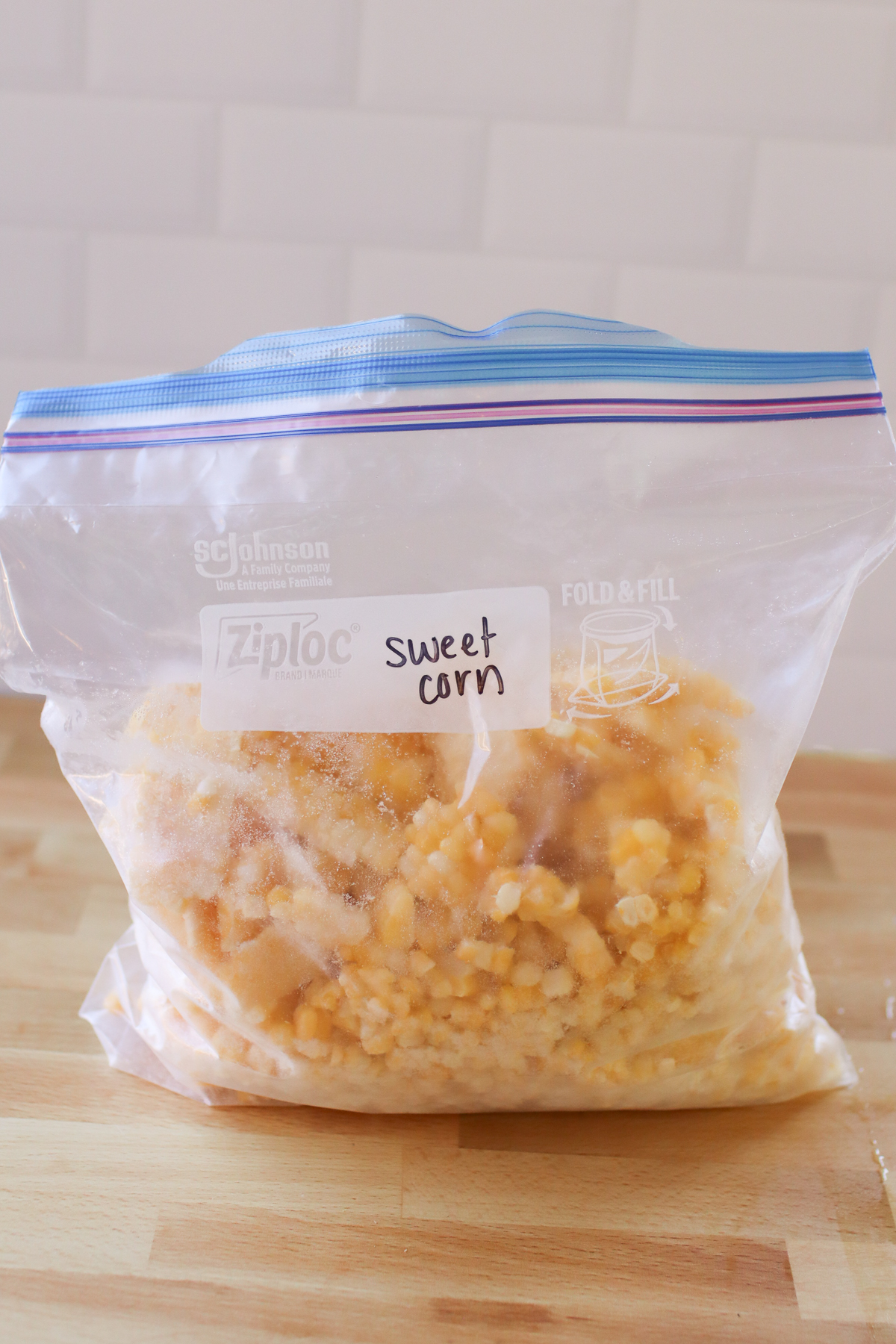
Step 7. Transfer the frozen corn to a freezer-safe container and return to the freezer immediately.
How to Freeze Corn on the Cob
If you want to freeze whole cobs of corn rather than cutting it off the cob, you definitely can! Simply follow the instructions above, but put the dried cobs directly in a freezer-safe bag and freeze them.
Helpful Tips
- If you are processing a lot of corn, you might find it easier to use an electric knife to cut the corn. Corn cutters can also be helpful. I never freeze so much corn at a time that cutting it is burdensome, but these tools will help if you do.
- Be sure to remove as much air from the bags as possible to prevent freezer burn.
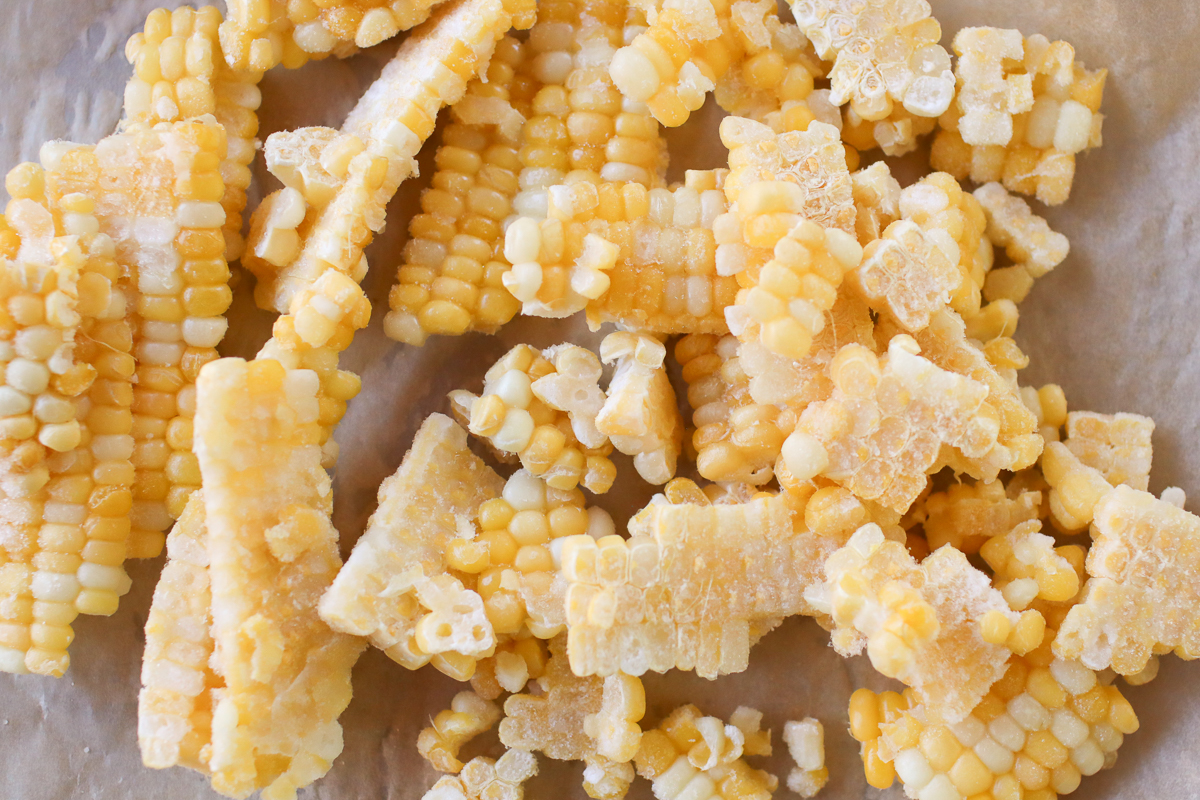
- The corn will likely come off in bunches of kernels, as you’ll see in my pictures. I just leave them this way as they typically break apart when I add the corn to dishes, but if it bothers you, you can absolutely break them apart after cutting the corn.
- When you cut the corn off the cob, some flesh will be left on the cob. You can scrape it out with the back of your knife to get every last bite if you want. I personally like to feed these to my chickens as a treat!
Should I Flash Freeze Corn?
Flash freezing refers to the process of spreading the corn out on a baking sheet in a thin layer and freezing it for a couple of hours before transferring it to its final container. This prevents the corn from freezing together in a big block and allows you to grab handfuls of it out of the freezer without breaking it up.
It’s really up to personal preference if you flash freeze or not. Some home preservers don’t find it worth the additional time and effort, particularly with corn. Oftentimes, if the corn freezes together in a large block, dropping the bag on the counter is enough to break it up.
I personally like to flash freeze, because I typically use just a fraction of a bag at a time, and I like grabbing what I need quickly and easily. If you keep your corn in a jar or other hard-sided container, I definitely recommend flash freezing.
If you don’t flash freeze, be careful not to overfill your freezer bag and lay it flat in the freezer, so the corn kernels are still in a thin layer.
Uses for Frozen Sweet Corn
My favorite use for frozen sweet corn is putting it in soups and chilis! It adds such a delicious flavor, and home-frozen corn tastes so much better than store-bought frozen corn.
You can also use frozen sweet corn in salads, salsas, stir-fries, and more. Frozen and thawed corn has a good texture (though not as crunchy as freshly-made corn), and it is absolutely delicious in any cooked dishes!
FAQs
Yes! Freezing corn is a great way to preserve it for future use. It’s important to blanch it first, however, to maintain its beautiful texture and color.
I recommend using it up within a year. Frozen corn is technically edible past that, but the flavor and texture will start to degrade, and you risk freezer burn.
I don’t recommend it. The blanching process helps the corn maintain its texture and color even after being frozen. Uncooked corn will not have a good texture after being frozen and thawed.
There you have it: how to freeze sweet corn! It’s such a simple process, you’ll easily be able to fit it into all of the summer preserving.
If freezer preservation is your jam, check out my other tutorials:
Related Content:
- How to Freeze Green Beans
- How to Freeze Bell Peppers
- How to Freeze Jalapeños
- How to Freeze Mirepoix
- How to Freeze Poblano Peppers
🌽 Thanks for visiting Sprig & Spoon! If you found this tutorial helpful, I’d love it if you left a review and let me know how it went in the comments!

How to Freeze Sweet Corn
Equipment
- Large pot
- Large mixing bowl
- sharp knife
- Baking sheet lined with parchment paper
- Airtight freezer-safe container I use freezer bags
Ingredients
- Sweet corn on the cob
Instructions
- Fill a large pot with water and get it boiling on the stove. In the meantime, shuck the corn cobs and remove any remaining silks.
- Once the water is boiling, drop the cobs in the water and let them boil for 3 minutes. Don’t overcrowd — you may need to work in batches.
- Remove the cobs of corn from the boiling water and immediately submerge in an ice bath to rapidly cool them.
- Let the corn chill in the ice bath for 10-15 minutes, then remove it from the water and pat it dry with a clean towel.
- Using a sharp knife, cut the kernels off of the cobs.
- (Optional) Spread the corn in a thin layer on a parchment paper-lined baking sheet and flash freeze for a few hours.
- Transfer the frozen corn to a freezer-safe container and return to the freezer immediately.
Notes
- If you are processing a lot of corn, you might find it easier to use an electric knife to cut the corn. Corn cutters can also be helpful. I never freeze so much corn at a time that cutting it is burdensome, but these tools will help if you do.
- Be sure to remove as much air from the bags as possible to prevent freezer burn.
- The corn will likely come off in bunches of kernels, as you’ll see in my pictures. I just leave them this way as they typically break apart when I add the corn to dishes, but if it bothers you, you can absolutely break them apart after cutting the corn.
- When you cut the corn off the cob, some flesh will be left on the cob. You can scrape it out with the back of your knife to get every last bite if you want. I personally like to feed these to my chickens as a treat!


You’ll be amazed at how much better this homemade frozen sweet corn is than what you can buy at the store! It makes chili and soup so delicious, and I even made corn salsa with it last week; it turned out great!